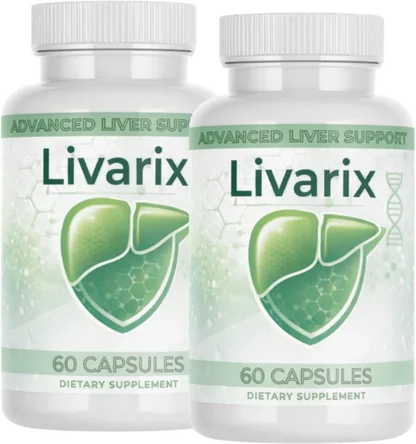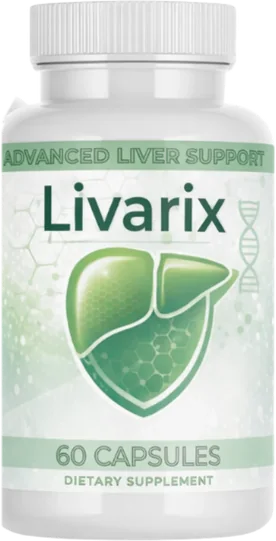
Livarix Capsules L-cysteine is the L-Cysteine HCl line, listed at 10 mg, the smallest amount among the eight ingredients on the seller sales page and in the owner pack 8. It is also the only line that is not a plant powder or plant extract.
This page explains what L-cysteine is, what the "HCl" means, why it is not the same thing as NAC, and what the Natural Medicines summary on WebMD says about its uses and safety. It also looks at a question the listing leaves open: where the L-cysteine comes from, which matters for the seller's "Plant Based Blend" badge. We are an independent information site and make no health claim for it.
What is the L-cysteine in Livarix Capsules?
It is an amino acid, listed as "L-Cysteine HCl" at 10 mg. The body makes cysteine from another amino acid, methionine, and it is also found in foods 1.
The sales page and the owner pack list the same line and amount 2. At 10 mg it is half the size of the next smallest line, alfalfa at 20 mg, and a little over 1% of the 780 mg that the listed amounts add up to (our arithmetic).
The seller gives no reason for including it in the copy we read, and we do not supply one. You can compare it with the other seven lines on our ingredients page.
What does "HCl" mean in Livarix Capsules L-cysteine HCl?
"HCl" stands for hydrochloride: the L-cysteine is supplied as a salt form rather than as the plain amino acid.
The listing does not say whether 10 mg is the weight of the whole hydrochloride salt or of the cysteine part alone. We have not seen the Supplement Facts panel, so we cannot confirm which applies to the Livarix Capsules L-cysteine HCl line. We cannot say how large the gap is, and it is the kind of detail a pharmacist may want to see in writing.
That is one more question for the printed panel. FDA's labeling guide sets out how amounts and ingredient forms should be listed on it 3.
Is L-cysteine the same as NAC?
No. L-cysteine is not the same as N-acetylcysteine (NAC), the Natural Medicines summary says 1. The two names are close, and they are often confused online.
That matters if you have read about NAC elsewhere. Anything said about NAC, its uses or its research does not carry over to the 10 mg of L-Cysteine HCl listed for Livarix. If a page or ad presents them as one ingredient, it is mixing up two different substances.
If you came to this page after reading an ad that mentions NAC, compare the ingredient name word for word with the line on your bottle. If you already take NAC or another amino acid product, tell your pharmacist so they can see the whole picture. Bring the bottles themselves, not a list from memory, so the pharmacist can read the exact forms and amounts.
How much L-cysteine do you get a day?
You get either 10 mg or 20 mg a day at two capsules, because the serving basis is not stated. The listing does not say whether 10 mg is per capsule or per 2-capsule serving.
| Question | What we found |
|---|---|
| Listed amount | L-cysteine 10 mg (sales page and owner pack) |
| Per capsule | About 5 mg or 10 mg, depending on the basis |
| Per day at two capsules | 10 mg or 20 mg (our arithmetic) |
| Form | Hydrochloride salt, as written |
| Source (plant, fermentation or other) | Not stated |
| Same as NAC? | No, per Natural Medicines |
| Daily Value | None given; there is no FDA Daily Value for it |
Our dosage page sets out the same two readings for every ingredient.
What does Natural Medicines say about L-cysteine uses and safety?
It says L-cysteine is used for many conditions without good scientific evidence, and that there is not enough reliable information on its safety in larger, medicine-level amounts 1. For pregnancy, it says there is not enough reliable information beyond the amounts found in food.
- Uses: many listed, none with good scientific evidence behind it.
- Larger amounts: not enough reliable safety information.
- Pregnancy and breastfeeding: not enough reliable information beyond food amounts.
The summary gives no threshold for "larger" that we can compare with 10 mg or 20 mg, so we make no judgment either way. Small does not mean harmless, and it does not mean meaningful; it means the summary does not tell us. The seller sales page we read makes no specific L-cysteine claim to compare against. Our evidence overview covers the formula as a whole.
Is the L-cysteine plant-based, as the badge says?
We cannot say. The source of the L-cysteine is not stated anywhere we have seen, so the seller's "Plant Based Blend" badge cannot be checked against this line.
The listing names no source, plant or otherwise, for this line. The capsule shell material is not stated either, and no other ingredients are listed, so we do not know whether the capsule is gelatin or vegetarian.
The badge names no certifier and gives no standard, and the same goes for the other seller badges. Our seals and badges page goes through each one. If you avoid animal-derived ingredients, ask the order desk at +1 (302) 200-3480 two direct questions: where the L-cysteine is sourced from, and what the capsule shell is made of. Ask for the answer in writing. If the desk cannot answer, the badge stays unconfirmed, and you can decide on that basis. Either way, the printed panel on your own bottle is the document to keep.
Does the L-cysteine line relate to the liver?
No source we cite connects this 10 mg line to the liver. The sales page markets the formula as a whole for liver function, "detoxification" and bile flow, and those are seller words, not findings about L-cysteine.
The Natural Medicines summary is the only source we have on this ingredient, and it says the uses people try it for lack good scientific evidence 1. We therefore have nothing to report for the liver, positive or negative, and we will not fill that gap with guesswork.
If a liver test result is what brought you here, start with your doctor. Our liver conditions page explains who should ask before taking any supplement, and NIH LiverTox says that if a supplement-related liver injury is suspected, all supplements should be stopped and liver tests monitored with a doctor 4.
What do ads say about amino acids like this one?
Ads and look-alike pages often give amino acids far more credit than the evidence does. The FTC expects health claims in ads to rest on competent and reliable scientific evidence 5.
We have seen many third-party pages about Livarix that are not the seller, with invented star ratings, "no side effects" lines and big percent-off banners. A page that describes the L-cysteine line in glowing terms, or blends it with NAC research, is going beyond the listing and beyond the source.
- Check whether the claim names this ingredient at this amount.
- Check whether it confuses L-cysteine with NAC.
- Check whether it links to anything you can read for yourself.
Our legit check explains how to tell the seller apart from look-alike pages.
Who should ask a doctor before taking Livarix Capsules?
Anyone pregnant or breastfeeding, anyone on regular medicines, and anyone with a liver or gallbladder condition should ask first. For L-cysteine itself, the main open question is pregnancy, where reliable information is lacking.
The rest of the formula widens the list:
- People with lupus, a hormone-sensitive cancer or kidney stones (alfalfa and beet root).
- People on blood thinners, diabetes medicines or water pills (dandelion).
- Anyone allergic to daisy-family plants such as ragweed (milk thistle).
- People with abnormal liver tests or a history of gallstones.
NIH LiverTox notes that most supplements are multi-ingredient mixtures, which makes it hard to tell which ingredient caused a problem if one occurs 4. The who should not take it page lists every group.
How do I check the L-cysteine on my bottle?
Read the printed panel; the owner pack says the bottle panel wins over any online list. Then take the remaining questions to the order desk and your pharmacist.
- Find the L-cysteine line and note its exact name and amount.
- Check the serving size, so you know the amount per capsule.
- Read the other ingredients for the capsule material.
- Ask the order desk for the source of the L-cysteine and the certificate of analysis for your lot.
- Tell your doctor or pharmacist about this and every other supplement you take 6.
Makers, not FDA, are responsible for the safety and labeling of supplements before sale 7. That is why the paperwork for your lot is worth asking for.
Frequently asked questions
How much L-cysteine is in Livarix Capsules?
The seller lists L-Cysteine HCl at 10 mg. The basis is not stated, so two capsules could hold 10 mg or 20 mg. Check the Supplement Facts panel on your bottle.
Can I read NAC research as if it were about Livarix Capsules L-cysteine?
No. The Natural Medicines summary on WebMD says L-cysteine is not the same as N-acetylcysteine (NAC). Information about NAC does not apply to this line.
Does Livarix Capsules say where its L-cysteine comes from?
No. Its source is not stated and the capsule material is not listed, so the seller's plant badge cannot be checked for this line. Ask the order desk for the source in writing.
What does HCl mean on the Livarix Capsules ingredient list?
HCl means hydrochloride, a salt form of the amino acid. The listing does not say whether 10 mg is the weight of the whole salt or of the cysteine alone.
Is Livarix Capsules L-cysteine a concern in pregnancy?
The Natural Medicines summary says there is not enough reliable information on L-cysteine in pregnancy beyond food amounts, and other listed ingredients raise pregnancy cautions too. Ask your doctor first.
Sources for this page
- WebMD (Natural Medicines): L-Cysteine overview, side effects and safety
- Livarix owner pack (contacts, returns, refund steps, product summary)
- FDA: Dietary Supplement Labeling Guide (Supplement Facts panel, serving size, ingredient listing)
- NIH LiverTox: Herbal and Dietary Supplements
- FTC: Health Products Compliance Guidance
- NIH Office of Dietary Supplements: Dietary Supplements: What You Need to Know
- FDA: Questions and Answers on Dietary Supplements
- Livarix seller sales page with ingredient list, kits, prices and guarantee wording, read on Nov 25, 2026
Label words come from photos of the Livarix bottle front. Ingredient amounts come from the seller sales page and owner pack; prices and guarantee wording from the sales page as read on Nov 25, 2026. Confirm them on your bottle and at checkout. Where sources differ, the printed label wins.