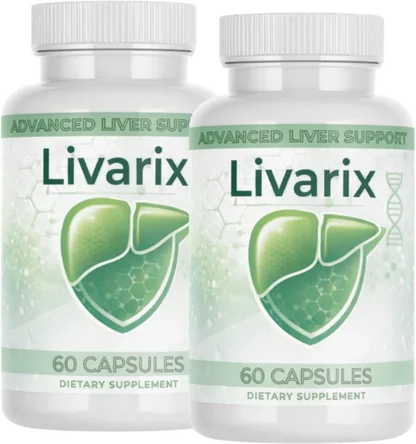
Livarix Capsules gallbladder questions come down to two listed ingredients, artichoke extract and beet root powder, that public sources flag for people with gallstones or gallbladder problems. Livarix Capsules is not intended for any gallbladder condition, and we make no claim about what it does to the gallbladder or to bile.
This page explains where the bile wording comes from, sets out each caution with its source, and lists who must talk to a doctor before starting. If you have gallstones now, have had them before, or have any bile duct problem, read the table first and then take the bottle to your doctor or pharmacist.
Is Livarix Capsules made for gallbladder problems?
No. Livarix Capsules is sold as a general dietary supplement, and nothing printed on the bottle front names the gallbladder 1.
The front label prints "Advanced Liver Support", the name, "60 CAPSULES" and "DIETARY SUPPLEMENT". The gallbladder link comes from the seller's sales page, not the bottle 2. The sales page also says the formula does not claim to treat or cure disease.
If a Livarix Capsules gallbladder question is what brought you here, a supplement is not the place to start. Your doctor needs to know about any stones, pain or past surgery before you add anything new.
What does the bile flow wording on the sales page mean?
The phrase about bile flow is the seller's marketing wording, not a finding and not a claim we make. The sales page lists it among the things the formula is said to aid, alongside "detoxification" and "metabolic balance".
We have not seen any study of the finished formula, so a Livarix Capsules bile flow claim has nothing behind it that we can show you. The FTC says health claims in ads need competent and reliable scientific evidence 3.
FDA rules also matter here. A supplement may carry structure/function statements only with the FDA disclaimer, and FDA does not review those statements before sale 4. The front label photos we have show no such disclaimer. Our detox claims page looks at the rest of this vocabulary.
Which listed ingredients carry gallbladder cautions?
Two of the eight listed ingredients carry gallbladder-related cautions in public sources: artichoke and beet root. The table lists all eight so you can see where the sources are silent, which is not the same as cleared.
| Ingredient (listed amount) | Gallbladder-related caution | Source |
|---|---|---|
| Artichoke extract (50 mg) | Gallstones and bile duct obstruction are listed as contraindications | Clinical overview 5 |
| Beet root powder (200 mg) | Oxalate content: caution for a history of gallbladder problems or kidney stones | NIH ClinicalTrials.gov protocol 6 |
| Turmeric powder (300 mg) | No gallbladder caution in the summary we use; stomach upset and liver warnings are listed | NCCIH 7 |
| Dandelion leaf powder (100 mg) | No gallbladder caution in the summary we use; possible interaction with water pills | NCCIH 8 |
| Milk thistle powder (50 mg) | No gallbladder caution in the summary we use; daisy-family allergy | NCCIH |
| Ginger (50 mg), alfalfa (20 mg), L-cysteine HCl (10 mg) | Not addressed for the gallbladder in the sources we use | See ingredient pages |
Amounts are as the seller lists them. The serving basis is not stated, so the real daily amount could be the figure shown or double it.
Why does artichoke matter if you have gallstones?
A clinical overview of artichoke lists gallstones and bile duct obstruction among its contraindications, meaning situations where it should not be used without medical advice. The same source says clinical data are lacking to support artichoke for any indication.
That overview also lists allergy to daisy-family plants, such as chrysanthemum, marigold, echinacea and ragweed. The sales page describes the artichoke extract as "standardized to 5% cynarin"; the owner pack does not repeat that detail.
You may see artichoke leaf described elsewhere for digestion. The European Medicines Agency's herbal committee accepts artichoke leaf preparations, on long-standing traditional use, for digestive complaints such as fullness, bloating and flatulence 9. That is a traditional-use conclusion, not clinical proof, and it covers artichoke-leaf products, not this formula. Our artichoke page has more.
Why does beet root matter for gallbladder and kidney stone history?
Beet root contains oxalate, and an NIH-listed study protocol for a concentrated beet root supplement advises caution for people with a history of kidney stones or gallbladder problems.
NCCIH makes a related point, saying juices made from high-oxalate foods such as beets may pose a threat to people prone to kidney stones 10. Livarix Capsules lists 200 mg of beet root powder, its second-largest listed amount.
The same protocol notes that pink coloring of urine and stools can happen with beet root, along with rare stomach cramping, diarrhea or allergic reactions. Knowing that in advance can save you a fright. Our beet root page covers the rest.
Who must ask a doctor before taking Livarix Capsules?
Anyone with a gallbladder or bile duct history must ask a doctor first, along with the other groups the sources flag.
- People with gallstones now, or a past episode of gallstones
- Anyone with a known bile duct blockage or narrowing
- People who have had gallbladder surgery; the sources we use do not address this, so ask
- Anyone with a liver condition or abnormal liver tests
- People with a history of kidney stones
- Anyone allergic to daisy-family plants such as ragweed
- Anyone on regular medicines, especially blood thinners, diabetes medicines and water pills
- Pregnant or breastfeeding women, and people with lupus or a hormone-sensitive cancer
Each group is explained on our who should ask first page. Liver-specific questions are on the liver conditions page.
What if your stomach is upset after starting?
Stop and call your doctor, and seek care promptly for severe or lasting pain. Several listed ingredients have stomach side effects in the sources, so a new symptom has more than one possible cause.
NCCIH lists nausea, vomiting, acid reflux, diarrhea and constipation for turmeric; bloating, nausea and gas for milk thistle; and abdominal discomfort, heartburn and diarrhea for ginger 11. MSK lists loose stools, gas and abdominal discomfort for alfalfa 12.
With a mixed product it is hard to tell which ingredient is responsible. If you have gallstones, tell the doctor about the capsules before anyone puts the symptom down to the stones. Our side effects page lists every reported effect by ingredient.
How should you read a Livarix Capsules gallbladder claim in an ad?
Read any Livarix Capsules gallbladder claim in an ad as marketing until you see a source. We found many third-party pages about Livarix that are not the seller, and some print claims such as "no side effects" that the public sources above contradict.
These checks take a minute:
- Does the claim name a study of this formula, or only of one herb?
- Does it mention the gallstone and bile duct cautions for artichoke at all?
- Does it show a Supplement Facts panel, or only a front label?
- Is it on the seller's page, or on a look-alike page with an "official website" button?
NCCIH reminds readers that makers need not prove safety or effectiveness before sale, and that interactions and contamination are real concerns 13. Our legit check covers look-alike pages in more detail.
How do you report a problem?
Report a suspected reaction to your doctor first, then to FDA. NIH's Office of Dietary Supplements points people to FDA's Safety Reporting Portal or 1-800-FDA-1088 14.
Keep the bottle, note the lot number and best-before date if printed, and write down when the symptom started. For order or refund questions, the order desk is at +1 (302) 200-3480. Our contact page lists every channel.
Questions to take to your doctor or pharmacist
Short, specific questions get the most useful answers. These are the ones we would ask with a gallbladder history.
- Does my gallstone or bile duct history rule out an artichoke extract?
- Does the oxalate in 200 mg of beet root matter for me?
- Could any ingredient interact with the medicines I take now?
- Should I wait until after a planned scan or surgery?
- Which symptoms should make me stop and call you?
Take the bottle so the full Supplement Facts panel can be read; the owner pack says the bottle panel wins over any list online. Other ingredients, the capsule material and any allergen statement are unknown to us. See our Supplement Facts page for what to look for.
Frequently asked questions
Can I take Livarix Capsules if I have gallstones?
Ask your doctor before taking it. A clinical overview of artichoke lists gallstones and bile duct obstruction as contraindications, and a beet root study protocol advises caution with gallbladder problems. Livarix Capsules gallstones questions need a doctor who knows your history, not a general answer.
Does the Livarix Capsules label make a bile flow claim?
Not on the front label photos we have. The bile wording appears on the seller's sales page, which is marketing copy. We have seen no study of the finished formula, and we make no claim about bile in our own words.
Can I take Livarix Capsules after gallbladder removal?
The sources we use do not address it, so we cannot say. Ask the surgeon or your doctor, and bring the bottle. Artichoke's listed cautions relate to gallstones and bile duct obstruction, and your doctor can judge whether they still apply to you.
Which Livarix Capsules ingredient is the main gallbladder concern?
Artichoke extract, listed at 50 mg, is the one with gallstones named as a contraindication in a clinical overview. Beet root powder, listed at 200 mg, is second, because its oxalate content prompts caution for gallbladder and kidney stone history.
Is pink-tinged stool a gallbladder sign while on Livarix Capsules?
Do not assume either way; ask your doctor. A study protocol for a concentrated beet root supplement lists pink coloring of urine and stools as a possible effect, and Livarix Capsules lists 200 mg of beet root powder. If you see red or pink color and are unsure of the cause, call your doctor.
Sources for this page
- Livarix bottle front label (product photos in the owner pack)
- Livarix seller sales page with ingredient list, kits, prices and guarantee wording, read on Nov 25, 2026
- FTC: Health Products Compliance Guidance
- FDA: FDA 101: Dietary Supplements
- Drugs.com natural products: Artichoke (clinical overview)
- ClinicalTrials.gov protocol NCT02058849: adverse-event list for concentrated beet root
- NCCIH: Turmeric: Usefulness and Safety
- NCCIH: Dandelion: Usefulness and Safety
- European Medicines Agency: Cynarae folium (artichoke leaf) herbal medicinal product summary
- NCCIH: "Detoxes" and "Cleanses": What You Need To Know
- NCCIH: Ginger: Usefulness and Safety
- Memorial Sloan Kettering Cancer Center, About Herbs: Alfalfa
- NCCIH: Safe Use of Complementary Health Products and Practices
- NIH Office of Dietary Supplements: Dietary Supplements: What You Need to Know
Label words come from photos of the Livarix bottle front. Ingredient amounts come from the seller sales page and owner pack; prices and guarantee wording from the sales page as read on Nov 25, 2026. Confirm them on your bottle and at checkout. Where sources differ, the printed label wins.